


No two students move through a lesson at the same pace or arrive at it with the same needs. Some finish early and want more of a challenge; others need extra time or support to catch up. Building a resource bank to meet all these needs can be time-consuming and difficult. It can be just as hard to find varied, diverse resources that let students see themselves in the material, which can have a real impact on engagement and motivation.
Let’s explore some approaches to drawing on LabXchange material to support your students’ particular needs.
When advanced students finish an activity or grasp a concept faster than their peers, it helps to have additional resources on hand so they can take their learning further. LabXchange resources are well suited to this kind of extension—whether that means deepening understanding of the same topic or giving students the opportunity to explore further afield.
Search for resources related to your topic and combine them into a custom pathway. You can share the pathway link with students who finish early or want to dig deeper. Alternatively, let students explore the LabXchange library on their own and engage with content that interests them.
Resources at different levels can be assigned to students who need more or less support to build the same content knowledge. Whether that means offering alternative ways to practice a concept in class or providing remediation for students who need to revisit earlier material, LabXchange resources can be matched to your students’ specific needs.
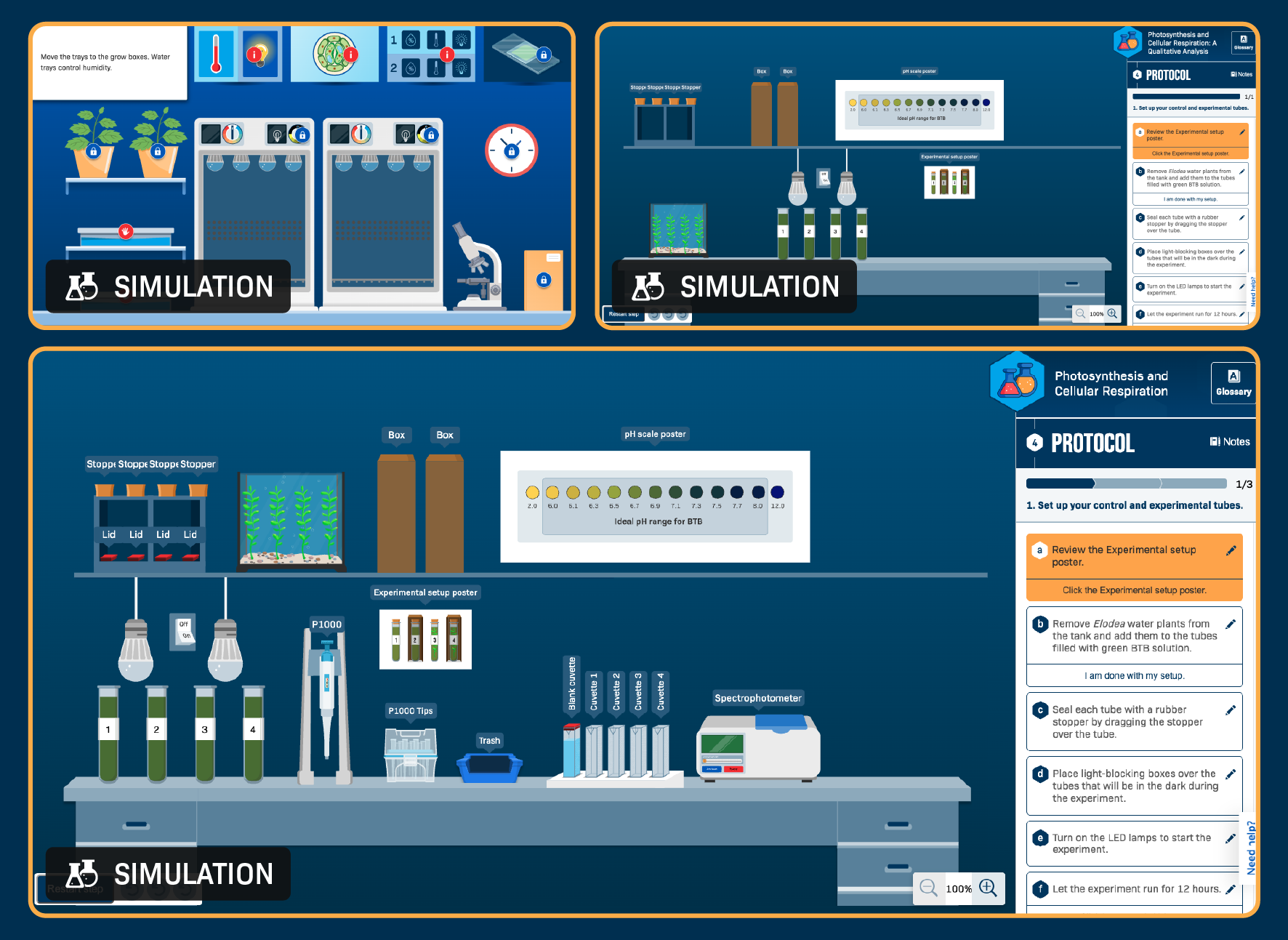
When giving students practice with photosynthesis and cellular respiration, you could assign these 3 simulations that explore the topic at different levels of complexity.
Assign each simulation to a student or group based on their current level of understanding (without flagging the difficulty level directly), or let students choose which level they’re comfortable starting at and work their way up as they build confidence.
Filter for Interactives, Videos, and Texts that offer different levels of depth on the same topic or concept. You’ll find more advanced material under our AP Biology collection and more foundational content under Middle School or High School tags.
Not every LabXchange resource is about mastering content. Some are about broadening what students see as possible for themselves. This includes resources that connect classroom concepts to real STEMM career pathways and resources designed to help every student see themselves reflected in the content they’re learning.
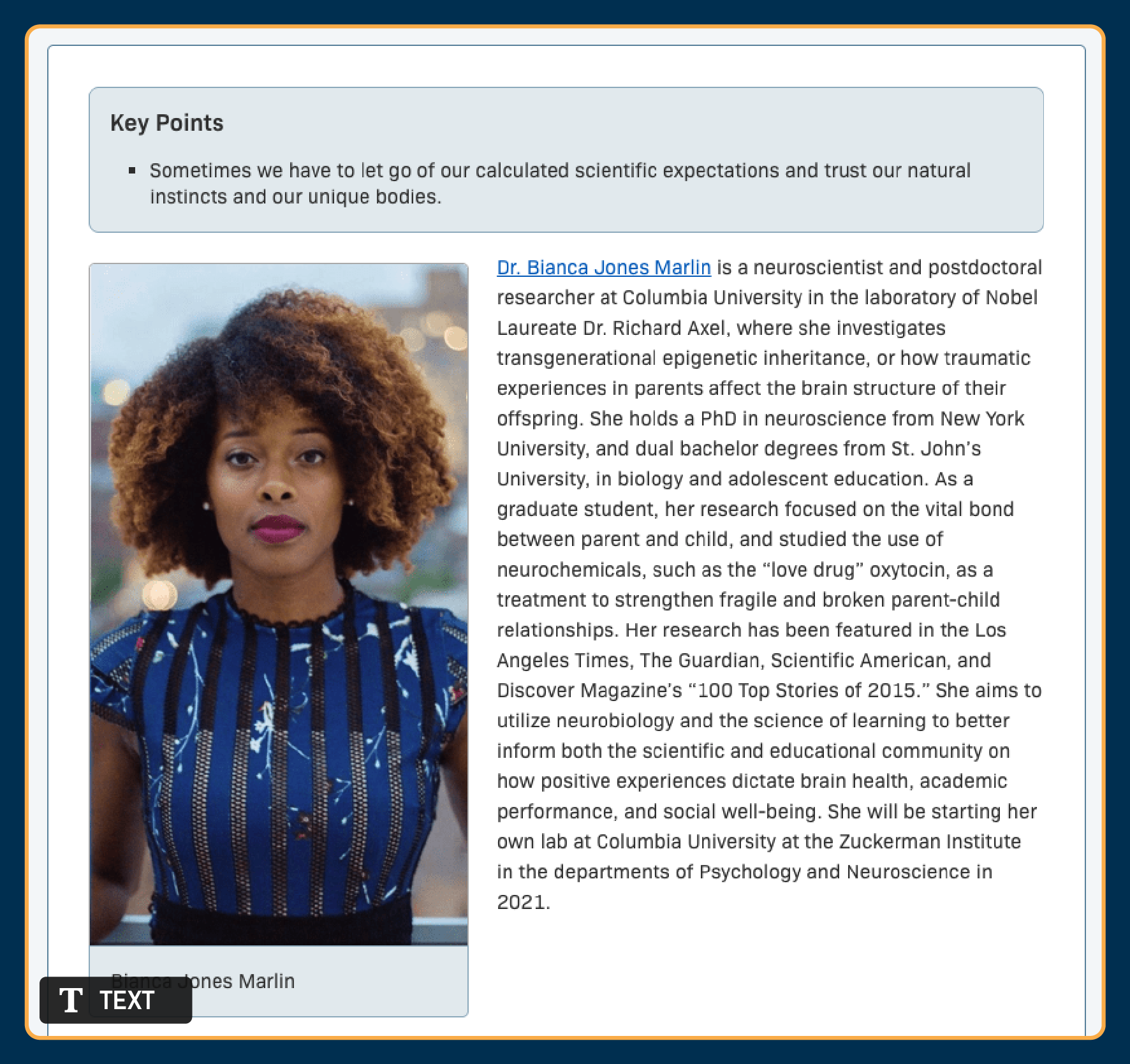
After teaching a lesson on cell signaling and hormone pathways, you could assign the resource above as a wind-down or exit ticket activity. The narrative brings a human element to the intricate molecular processes students just learned, connecting complex, carefully regulated signaling pathways to a real, relatable story. It’s a nice way to close out a dense lesson on a more personal note.
Filter for Narratives or search for career-connected content in your subject area. These resources connect conceptual understanding with real-world application and can plant the seed of a future STEMM career.
CareerXplorer is also worth exploring. It offers career profiles, simulations, and teaching guides that connect curriculum-aligned content to real career pathways.
You've now seen how LabXchange resources can support lesson design at each of its key stages. In the final module, we'll bring it all together and walk through what that looks like across a full lesson.
.svg)

.svg)


